

How do I Prevent Repetitive Strain Injury (RSI) of my Wrist During Work-Related Computer Use?
- Nancy Lu

- Jan 5
- 3 min read

What is a repetitive strain injury (RSI)?
A repetitive strain injury (RSI) is an injury of your muscles, tendons, and/or nerves. It occurs when you are required to participate in forceful, awkward and/or repetitive movements of your limbs for long durations; like when you are working on a computer all day. Symptoms may include tenderness, throbbing, tingling, altered/loss of sensation, and/or loss of strength.
This article will focus on RSI of specifically the wrist, such as tendonitis, and less commonly, Carpal Tunnel Syndrome (CTS). But other common examples of RSI include the neck, shoulder, elbow, and low back. Stay tuned to read more about these topics in future blogs!
How can I prevent a wrist RSI?
As with any therapeutic approach to injury-prevention, it is important to address an issue using a multi-modal approach. In this article, we will outline four main strategies based on a 2024 review study. As well, I will share with you some tried-and-true exercises, for both rehabilitative and preventative purposes.
In the 2024 review study, four main recommendations were identified:
(1) Ergonomic interventions
(2) Rest breaks
(3) Mouse design
(4) Keyboard modifications
(1) Ergonomic Interventions
This requires active and willing participation in training and physical and/or behavioural modifications. Intervention should be a personalized evaluation of your workstation; taking into account your specific tasks and behaviours, rather than a generic guideline.
Studies support the following specific implementations:
Using a wrist support pad can help prevent CTS.

Using a corner workstation can offer forearm support, and thereby increase the variability of muscle activation patterns. Which in turn, may decrease the "repetitive" nature of your work.

(2) Rest Breaks
Studies support the following specific length and frequency of rest breaks:
Rest breaks of 5 and 10 min after every hour of work are both supported by studies.
A microbreak of 30s at 20-min intervals is also supported. One study specifically found that this type of break can prevent back, shoulder, and forearm injuries.
Consider asking your Physiotherapist for specific exercises you can do during some of the rest breaks. As well, scroll down to the bottom of this article to get some ideas.
(3) Mouse Design
A mouse should encourage a neutral forearm posture and reduce excessive pronation.

A neutral forearm allows for a more relaxed posture, thereby reducing RSI. Specifically, one study showed it may have a protective effect on your ulnar nerve at the level of the wrist.

(4) Keyboard Modifications
The following behavioural modifications during typing are supported by studies:
Use light touch
Maintain your wrists in a neutral position
The following equipment are recommended to achieve the above-mentioned posture and behaviours:
Wrist support

Split keyboard

One study also supported wrist exercises, like moving the wrist in a circular direction at regular intervals, can prevent CTS.

What exercises should I do to prevent and treat RSI?
The following recommended exercises are extracted from commonly cited sources, and through years of experience in my own practice. But of course, always consult your Physio to prescribe the most appropriate exercises for you; based on your personalized assessment findings and therapy goals.
Stretches:
Forearm flexors


Forearm extensors
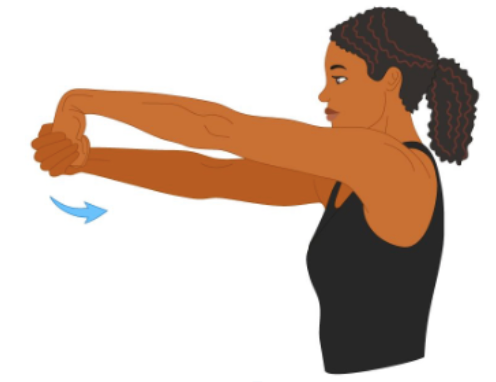
Thumb webspace

Range of motion:
Wrist circles in weight bearing

Tendon glides

Strengthening:
Finger elastic extension

Farmer’s walk

Reference list
Princeton University Health Services. Ergonomics & Computer Use. https://uhs.princeton.edu/health-resources/ergonomics-computer-use#rsi. Accessed Dec 28, 2025.
Therapeutic Approaches for the Prevention of Upper Limb Repetitive Strain Injuries in Work-Related Computer Use: A Scoping Review. J Occup Rehabil. 2024 Jun 6;35(2):234–267. https://pmc.ncbi.nlm.nih.gov/articles/PMC12089234. Accessed Dec 28, 2025



Comments